What would be a good response when someone says “I like Ron Paul but don’t like his foreign policy.” Here are some of the responses from my good friends at Ron Paul Homeschoolers.
I like Ron Paul, except for the Constitution.
Ron Paul favors a strong national defense, not a strong national offense.
He just wants to bring the troops home from the border of Afghanistan and have them protect our borders in the U.S.A. What’s wrong with that? It would stop illegal immigration.
Do you realize that if we continue our current foreign policy of policing the world, we will not only incite more hate against us, but soon we will go broke and be unable to adequately defend our own country?
I say “oh you like to go to war, have fathers, brothers, husbands, daughters, mothers, and wives die in other countries because someone “might” someday make a ‘weapon of mass destruction’?” After all, don’t we go to our children’s schools and punch all the children in the face because someday they “might” bully our kid?” We have weapons of mass destruction and a government that is trigger happy!! The other countries should protect themselves from US!
Well, you’re entitled to your opinion but a large plurality of CIA analysts & agents, military veterans currently deployed as well as people in the area and Israel’s Prime Minister & Defense Minister do agree with him. What are your qualifications?
I would say that his foreign policy is really simple: 1) We must follow the Constitution, first and foremost. And that requires that congress approve wars in advance, and 2) Foreign aid is just a means for the US to exercise control over other countries. It’s wrong for us, and it’s wrong for them. We cannot afford to be the World Police and hand out all this money. We are going broke and can’t even protect our own borders, much less the borders of Afghanistan.
Most people are misinformed concerning his foreign policy as well as most other issues… thanks to the media. We always try to encourage people to check out what Ron Paul actually says.
https://www.facebook.com/photo.php?fbid=285939851456058&set=a.106381496078562.4178.100001201370181&type=3&theater
It really takes more than a quick response to convert someone’s thought process out of something so ingrained and sub-conscious as neo-con foreign policy. I find I can usually sum it up in a couple minutes and explain the logic in a couple minutes, but I have to keep in mind it took me a while to snap out of the Limbaugh/Beck/Bush trance I was in.
Person: “I like Ron Paul, I just don’t like his foreign policy.”
Me: “If you do not like his foreign policy, it is because you do not understand good foreign policy. And you do not understand good foreign policy because the U.S. has not displayed it in 50 years.”
If another country sent a drone plane into USA that killed your child would you be pissed and want to retaliate? When they answer yes, you say then imagine how many tens of thousands of pissed parents there are in the middle east. We have more enemies than before all the invasions. We are less safe. And strategically we are doing exactly what Osama said he wanted to happen. We are bogged down in multiple wars and it is bankrupting America. “They” are winning now, but bringing the troops home and getting our budget under control means we again start to win, and we get to reunite soldiers with their families.
I’d remind them that 1) you don’t have to go too far back in history to see that conservatives traditionally favored Ron Paul’s foreign policy, 2) that foreign interventionism is subject to the same disastrous unintended consequences that conservatives recognize in domestic interventionism and for the same reasons, and 3) that Ron Paul’s foreign policy is in accord with foreign policy experts (including CIA counterterrorism experts). I’d then challenge their belief that the same government that mismanages Social Security, public education, and the economy can somehow be trusted to build up and tear down entire nations. If I’m talking to a conservative, I’d remind him that any power I hand to the government, the government keeps and gives to future politicians. I’d ask him why he would trust Barack Obama, Hillary Clinton, Harry Reid or anyone else to kill people overseas in our names? I’d ask whether he’d trust Mitt Romney, Newt Gingrich, or Rick Santorum to do any better. I’d point to the founding fathers who advise against entangling alliances, to the Federalist Papers that warn that powerful executives inevitably take nations to war, and to the Constitution which insists that all wars must be declared. Together these arguments make a powerful case for Ron Paul and his foreign policy.
Ron Paul wants a very strong defense budget, but not a “military” budget, i.e. not paying $1 mil to have an embassy in Iraq or paying for the US to defend Japan. He has a very solid foreign policy: if we need to go to war, we will go, clean things up and come back. Not that tit for tat that lasts for years and make some corporations very rich.
I think it’s a huge disservice to our cause to argue. Instead use simple sales techniques like finding common ground TO agree on… emphasize the importance of those issues. AFTER that is done, THEN INQUIRE what it is about his foreign policy that concerns them… ONLY then can you SOFTLY attempt to sway opinion or even point out that the President is not all powerful and that he will likely be met with opposition. You want to leave them feeling GOOD about their opinions. This is part of what they talked about at a RP meeting I attended last week. You’ll never win a sale by arguing with a potential customer will you?
There are some great responses here… There are a lot of things I do already mentioned. One other thing is I try and make it personal. I assume that the threat is real (most people are not ready to let go of that assumption at first) and ask about a scenario like this: Let’s say you have a neighbor who has made threats on your life. You heard from a friend that he went and recently bought a gun. Do you, A. Sneak up on him in his house and shoot him on the spot, B. Hold him at gunpoint making threats and promising to kill his family, do all sorts of unmentionable things to him and place a guard over his house 24 hrs. or C. Go out and buy the very best security system you can, arm yourself, train yourself in the best of self defense, buy an attack dog etc. etc. all the while being as friendly as safely possible and trying to change their mind about you (or something to that effect). Which of these is legal? Which of these is Biblical? If it’s not ok for us a people to do, is it right for a country to do it? I try to be polite and listen to them, but also try to disengage or change the subject if the person refuses to listen and just wants to be a RP hater.
Our government is borrowing over 40% of it’s annual expenditures. Our children can’t afford us to be the world’s police force or fund the defense of nations who refuse to do it for themselves. We need to cut everything now while we can make choices in the matter rather than later when we will have no choice.
I don’t bother with the blowback, noneyer or golden rule aspects; either they get that or they don’t. It doesn’t take a rocket scientist to realize that borrowing almost 50% of what you spend will quickly dig a hole that can’t be escaped.
My normal response to this question is — I was a naval cryptologist for 4 years and was a 9/11 first responder and I support Ron Paul… Then ask if they want to talk about foreign policy any more. For some reason the conversation stops right there
The biggest obstacle is really one’s source of history. If someone is willing to look at the US/CIA involvement, usually they get it. Trying to offer that other point of view and get them to watch a good video
I’d say Paul’s policy is unambiguous in that he wants to properly defend American soil, and not worry at all about policing other governments. He does not want to pay other countries for political influence yet he is less of an isolationist than the others, because he would promote more free trade with some countries that we’re currently not trading with. Also, he does not want the military policing our borders, but says there should be more border patrol outposts. Consequently increasing border security and making OUR COUNTRY safer. With a big smile!
http://www.youtube.com/watch?v=B4a__tcfFughttp://www.youtube.com/watch?v=B4a__tcfFug
We met a missionary at our missions conference last October. He lives incognito among Muslims. He said that 7% of them are of the terrorist variety (memorize the Koran, believe in Jihad etc.), 20% teach/read the Koran but skip the violence, and the rest are just regular people living their lives who happen to have been born into Muslim families. They are Muslim like Americans are “Christian.” They bear no ill-will to us, but of course that will change the more America intervenes and bombs their countries. When Santorum and Co. talk of killing Muslims, I wonder if he even knows these percentages? Ron Paul had to clarify at a debate the difference between the Taliban and al Qaeda to educate them (one just wants us off their land, the other is the “terrorist”).
Osama Bin Ladens goal was to spread our military thin and in so doing bankrupt America. The transcripts to the speech where he declared this goal is easily found on CNNs website. The foreign policy of all the other candidates plays right into his plan and at the moment, we are on the brink of handing them victory.
Ron Paul’s foreign policy is the only one suggested that will both defend us from bankruptcy and defend our borders against terrorists.
Foreign policy must not be thought apart from the proper role of civil government. And once we define the proper role of government, we cannot have a double standard.
So if we say the proper role of civil government is to have an interventionist foreign policy, then we do not have justification to condemn other countries for having the same foreign policy. Naturally, we would shun such an idea and find offense that another country would intervene in the affairs of our nation.
But if we say the proper role of civil government is to have a non-interventionist foreign policy, then we rightfully can condemn other governments who want to intervene in our nation’s internal affairs and our natural inclination for such trespasses are justified.
Still, Ron Paul recognizes that such trespasses do occur and must be dealt with, but only within the confines of Constitutional law. This does not make him a pacifist, contrary to the popular misinformation espoused by the media and political pundits. If necessary, should the means of diplomacy fail, and if it is within our means to shed blood and treasure for such an endeavor, he will go to Congress and ask the representatives of the people to vote for a declaration/authorization for war.
I tell them you know I thought it was crazy the first time I heard him say that then I heard him the second time and really understood what he was saying and realized he is absolutely unbelievably soooo right that the people aren’t really listening to what he is saying!! It makes to much common sense to people so it dosn’t soak in right away. You might consider listening to him a couple more times cuz this biggest problem is they don’t give him enough air time to explain himself thouroughly but when you understand him it will hit you like a stone and you will realize how crazy the media is for saying things that are untrue about him!!
My response: “So you like the fact that the United States spends so much money and risks the lives of so many troops on wars that haven’t been declared, for the naive hope of being a hero and imposing democracy upon unready nations? You like that we are policing and pestering countries like Iran, and wonder why they are retaliating? Ron Paul would not have made the mistake we’ve made with the military the last decade, and will not let us repeat it in Iran. What’s not to like?”
Short answer? It’s not “his” foreign policy, it’s the constitution’s foreign policy. You don’t have to like it, you just have to respect it.
I know what you mean! I used to think that Paul’s foreign policy was radical and dangerous. But you know, after I did a lot of research and reading about what good foreign policy entails, and realizing that the military overwhelmingly supports Paul with contributions, I concluded that Paul is the only one whose vision for America will keep America safe. The greatest empires in the world have collapsed due to being spread too thin– Rome, British Empire, the Soviet Union– and we have more than 700 bases in almost every country on Earth. We would be a lot safer with those soldiers here at home, protecting our borders.
Paul believes we should spend Billions for defense, but not a penny for empire.
Paul would wipe off the earth any credible threat. Lots of people don’t get this message because of the spin, but he is the strongest candidate on national defense. We wouldn’t be in 10-year ‘conflicts’. If there is a threat, Paul would get a declaration of War, and annihilate the target.
Just an observation folks. You’ll do much better if you phrase many of these great points as a question. The Socratic method works. Telling someone they’re wrong for whatever reason is not as effective as leading them to that conclusion on their own.
You could try…”that’s funny because the troops who are actually expected to execute that policy favor him overwhelmingly” -one of said troops
I as recently as a week or two ago commented on this very thing. My response then was: Utilitarianism is a concept by which you measure the “goodness” and “badness” consequence(s) of some set of decisions, subtract the bad from the good, and make the decision based on the greatest value. For instance, say I have to decide whether or not to rob a bank. Obviously some good can come from that: I’ll have money (+10), I can pay all of my bills (+20), I can have new things (+5), etc. Then some bad can come from it: If caught, which is a likely outcome: Spend a long time in prison (-5000), Criminal record (-5000), Don’t get to keep the money (-35). Based on that likelihood, I can assume that the value of a Yes decision to rob a bank may be -10000. That’s a pretty serious assessment, and it’s kind of how most people make logical decisions anyways. For ANYONE who dareth to say to me, “well I like Ron Paul on everything EXCEPT his Foreign Policy ideas,” then I reply: have a look at the whole package, look at him and compare him to everyone else. If you take a serious utilitarian assessment of Ron Paul versus every other candidate, you will probably observe that Ron Paul is the best candidate in every other category, despite however many points he might lose in Foreign Policy. (Note: I actually agree with him on Foreign Policy. I love the debate he inspires–he is spot on.) It is a stupid offense against the good Doctor, and I will correct all those who say dare it anymore.
I guess you could always simplify it to say something more like “If you were to approach Ron Paul from a utilitarian perspective, despite a single value you may not agree with, we would still be better off.”
I would ask if they disagree with the Constitution? or Do you think the Constitution is a living document? The Constitution states we need a declaration of war from the Congress. Where in the Constitution does it say we must defend allies? or Where does it state that we must fund allies to sustain there well being.
The President of Isreal agrees with Ron Paul, the head of the CIA Osama bin Laden task group agree with Ron Paul, he gets more than twice as much funding as all the other candidates combined from our armed forces… He preaches that we must have a golden rule in our foreign policy, what part do you disagree with?
I usually end with “WWII was the last constitutionally declared war. Vietnam was horrible for everyone, including the troops who were spit upon when they came home. Ron Paul would never send our troops into harm’s way without approval of the people of the US, via their congressional representatives and a legal declaration of war. He would never send them without a clear mission. He would never send them without the weapons and equipment they need to accomplish the mission. We can’t afford to police the world, but we can afford to start protecting our own borders instead of everyone else’s”
I usually clarify what it is they don’t like. They usually say he’s not for israel or bringing our troops home would be unsafe. My answer depends on their concern. The standard two points I always make though are 1).We can’t afford to be at war anymore. Period. Unless we want to eat or have electricity somethings got to give! We can have military protection on our soul & cut military spending at the same time! 2). What does the constitution say about foreign policy? Our foreign policy should line up with the constitution serving the interests of this country & it’s people. We shouldn’t be nation building or meddling in other countries affairs. They should be allowed to function as a sovereign country & not depend on the US for guidance & financial support!
You can buy it here.
You can see it free here (Parts 1-9 on YouTube)
You can get it from Netflix here.
The strongest faith is subject at times to shakings, as the stoutest ships are to tossings, as the wisest men are to doubtings, as the brightest stars are to twinklings. Therefore, Christian, if at certain times you should not be sensible of the growth of your faith, yet do not conclude that you have no faith. Faith may be in the habit, when it is not in the act; there may be life in the root of the tree, when there are neither leaves, blossoms, nor fruit upon the tree; but they will show themselves in the spring, and so will the habits of faith break forth into acts, when the Sun of righteousness shall shine forth, and make it a pleasant spring to the soul.
–Thomas Brooks
Some pro-life organizations have given Dr. Paul a low rating, saying he is only moderately pro-life. Here are the four objections they have to Ron Paul:
1. Objection: Ron Paul voted “no” on the Human Cloning Prohibition Act (H.R. 534) that would ban the creation of and trafficking in cloned human embryos, both embryonic and experimental. It would also ban the importation of “any product derived from” cloned human embryos. This bill would establish both criminal and civil penalties for cloning. The bill banning human cloning passed the House with 241 votes.
Response:
A “no” vote doesn’t necessarily mean Dr. Paul is “for” human cloning, rather that, once again, he believes the federal government should only legislate things the federal government was granted the power to legislate.
In 2003 Ron Paul introduced a bill called “Human Cloning Prevention Act of 2003″ (H.R. 938)
The bill would prohibit any Federal agency from making any grant, contract, or other payment to any entity that “within the past year has engaged in human cloning.” The phrase “human cloning” is defined to include somatic cell nuclear transfer technology for the purpose of deriving stem cells. The bill was referred to the House Committee on Energy and Commerce.
Note that the bill he introduced doesn’t ban cloning, rather it prohibits the government from funding it. That would be consistent with his small/less government approach, and one that wouldn’t infringe on personal liberties. It would be up to the states to regulate human cloning. There are fifty states. What are the odds that out of fifty experiments in solving the cloning problem, one of them (or several in cooperation) will develop something that works, and that other states will then begin to follow suit?
Those who raise this objection want to make it look like Ron Paul is “for” human cloning and therefore is not in line with the standard pro-life position.
Fair-minded pro-life, pro-family people must concede that Ron Paul does not endorse human cloning.
————-
2. Objection: He voted “no” on the Child Obscenity and Pornography Prevention Act (H.R. 4623) that would prevent trafficking in child pornography and obscenity and seek to prevent the use of child pornography and obscenity to facilitate crimes against children. The bill passed the House 413-8.
Response:
Here is Congressman Paul’s statement on why he voted “no” on H.R. 4623:
[quote]
Mr. Speaker, as a parent, grandparent and OB-GYN who has had the privilege of delivering over 4,000 babies, I share the revulsion of all decent people at child pornography. Those who would destroy the innocence of children by using them in sexually-explicit material deserve the harshest punishment. However, the Child Obscenity and Pornography Prevention Act (HR 4623) exceeds Congress’ constitutional power and does nothing to protect any child from being abused and exploited by pornographers. Instead, HR 4623 redirects law enforcement resources to investigations and prosecutions of “virtual” pornography which, by definition, do not involve the abuse or exploitation of children. Therefore, HR 4623 may reduce law enforcement’s ability to investigate and prosecute legitimate cases of child pornography.
HR 4623 furthers one of the most disturbing trends in modern politics, the federalization of crimes. We have been reminded by both Chief Justice William H. Rehnquist and former U.S. Attorney General Ed Meese that more federal crimes, while they make politicians feel good, are neither constitutionally sound nor prudent. Rehnquist has stated that “The trend to federalize crimes that traditionally have been handled in state courts . . threatens to change entirely the nature of our federal system.” Meese stated that Congress’ tendency in recent decades to make federal crimes out of offenses that have historically been state matters has dangerous implications both for the fair administration of justice and for the principle that states are something more than mere administrative districts of a nation governed mainly from Washington.
Legislation outlawing virtual pornography is, to say the least, of dubious constitutionality. The constitution grants the federal government jurisdiction over only three crimes: treason, counterfeiting, and piracy. It is hard to stretch the definition of treason, counterfeiting, or piracy to cover sending obscene or pornographic materials over the internet. Therefore, Congress should leave the issue of whether or not to regulate or outlaw virtual pornography to states and local governments.
In conclusion, Mr. Speaker, while I share my colleagues’ revulsion at child pornography, I do not believe that this justifies expanding the federal police state to outlaw distribution of pornographic images not containing actual children. I am further concerned by the possibility that passage of HR 4623 will divert law enforcement resources away from the prosecution of actual child pornography. HR 4623 also represents another step toward the nationalization of all police functions, a dangerous trend that will undermine both effective law enforcement and constitutional government. It is for these reasons that I must oppose this well-intentioned but fundamentally flawed bill.
[end quote]
Conclusion: Article 1, Section 8 of the constitution does not give the federal government the authority to pass laws like this for the entire nation. Each state has its own set of laws and prescribed punishments for crimes against children and pornography. If there is a federal law, then the states must abide by that one. What if a particular state wants a stronger law? The 50 states are sovereign and only need the federal government to do the things the constitution has spelled out for them to do.
The people who consider the vote of “no” to be anti-family don’t realize that this bill was mostly centered around virtual content and included content that wasn’t even obscene or considered pornography. You’re not really directly preventing anybody from being hurt or exploited when you outlaw drawings and cartoons such as anime that offers hints of sexual conduct. It doesn’t even have to be a drawing, it could be written text… including text that’s not even obscene. It’s very far-reaching and tramples all over the first amendment while not preventing exploitation nor punishing those involved in it, and actually redirecting law enforcement resources away from those who are.
————————-
3. Objection: Ron Paul voted “no” on the Child Interstate Abortion Notification Act. The bill (S.403) attempted to help protect a state’s authority by making it a crime to transport a minor girl across state lines in circumvention of a state’s parental notification law. The House added a provision requiring abortion facilities to notify a girl’s parent before they perform an abortion on an out-of-state minor. The bill passed the House with 264 votes.
Response:
Ron Paul tells us why he voted “no” on the CHILD INTERSTATE ABORTION NOTIFICATION ACT — (House of Representatives – September 26, 2006)
[quote]
Mr. PAUL. Mr. Speaker, in the name of a truly laudable cause (preventing abortion and protecting parental rights), today the Congress could potentially move our Nation one step closer to a national police state by further expanding the list of Federal crimes and usurping power from the States to adequately address the issue of parental rights and family law. Of course, it is much easier to ride the current wave of criminally federalizing all human malfeasance in the name of saving the world from some evil than to uphold a Constitutional oath which prescribes a procedural structure by which the nation is protected from what is perhaps the worst evil, totalitarianism carried out by a centralized government. Who, after all, wants to be amongst those Members of Congress who are portrayed as trampling parental rights or supporting the transportation of minor females across state lines for ignoble purposes.
As an obstetrician of almost 40 years, I have personally delivered more than 4,000 children. During such time, I have not performed a single abortion. On the contrary, I have spoken and written extensively and publicly condemning this “medical” procedure. At the same time, I have remained committed to upholding the constitutional procedural protections which leave the police power decentralized and in control of the States. In the name of protecting parental rights, this bill usurps States’ rights by creating yet another Federal crime.
Our Federal Government is, constitutionally, a government of limited powers. Article one, Section eight, enumerates the legislative area for which the U.S. Congress is allowed to act or enact legislation. For every other issue, the Federal Government lacks any authority or consent of the governed and only the State governments, their designees, or the people in their private market actions enjoy such rights to governance. The tenth amendment is brutally clear in stating “The powers not delegated to the United States by the Constitution, nor prohibited by it to the States, are reserved to the States respectively, or to the people.” Our Nation’s history makes clear that the U.S. Constitution is a document intended to limit the power of central government. No serious reading of historical events surrounding the creation of the Constitution could reasonably portray it differently.
Nevertheless, rather than abide by our constitutional limits, Congress today will likely pass S. 403. S. 403 amends title 18, United States Code, to prohibit taking minors across State lines to avoid laws requiring the involvement of parents in abortion decisions. Should parents be involved in decisions regarding the health of their children? Absolutely. Should the law respect parents’ rights to not have their children taken across State lines for contemptible purposes? Absolutely. Can a State pass an enforceable statute to prohibit taking minors across State lines to avoid laws requiring the involvement of parents in abortion decisions? Absolutely. But when asked if there exists constitutional authority for the Federal criminalizing of just such an action the answer is absolutely not.
This federalizing may have the effect of nationalizing a law with criminal penalties which may be less than those desired by some States. To the extent the Federal and State laws could co-exist, the necessity for a Federal law is undermined and an important bill of rights protection is virtually obliterated. Concurrent jurisdiction crimes erode the right of citizens to be free of double jeopardy. The fifth amendment to the U.S. Constitution specifies that no “person be subject for the same offense to be twice put in jeopardy of life or limb …..” In other words, no person shall be tried twice for the same offense. However, in United States v. Lanza, the high court in 1922 sustained a ruling that being tried by both the Federal Government and a State government for the same offense did not offend the doctrine of double jeopardy. One danger of unconstitutionally expanding the Federal criminal justice code is that it seriously increases the danger that one will be subject to being tried twice for the same offense. Despite the various pleas for Federal correction of societal wrongs, a national police force is neither prudent nor constitutional.
We have been reminded by both Chief Justice William H. Rehnquist and former U.S. Attorney General Ed Meese that more Federal crimes, while they make politicians feel good, are neither constitutionally sound nor prudent. Rehnquist has stated that “The trend to federalize crimes that traditionally have been handled in State courts ….. threatens to change entirely the nature of our Federal system.” Meese stated that Congress’ tendency in recent decades to make Federal crimes out of offenses that have historically been State matters has dangerous implications both for the fair administration of justice and for the principle that States are something more than mere administrative districts of a nation governed mainly from Washington.
The argument which springs from the criticism of a federalized criminal code and a Federal police force is that States may be less effective than a centralized Federal Government in dealing with those who leave one State jurisdiction for another. Fortunately, the Constitution provides for the procedural means for preserving the integrity of State sovereignty over those issues delegated to it via the tenth amendment. The privilege and immunities clause as well as full faith and credit clause allow States to exact judgments from those who violate their State laws. The Constitution even allows the Federal Government to legislatively preserve the procedural mechanisms which allow States to enforce their substantive laws without the Federal Government imposing its substantive edicts on the States. Article IV, Section 2, Clause 2 makes provision for the rendition of fugitives from one State to another. While not self-enacting, in 1783 Congress passed an act which did exactly this. There is, of course, a cost imposed upon States in working with one another rather than relying on a national, unified police force. At the same time, there is a greater cost to State autonomy and individual liberty from centralization of police power.
It is important to be reminded of the benefits of federalism as well as the costs. There are sound reasons to maintain a system of smaller, independent jurisdictions. An inadequate Federal law, or an “adequate” Federal law improperly interpreted by the Supreme Court, preempts States’ rights to adequately address public health concerns. Roe v. Wade should serve as a sad reminder of the danger of making matters worse in all States by federalizing an issue.
It is my erstwhile hope that parents will become more involved in vigilantly monitoring the activities of their own children rather than shifting parental responsibility further upon the Federal Government. There was a time when a popular bumper sticker read” It’s ten o’clock; do you know where your children are?” I suppose we have devolved to the point where it reads” It’s ten o’clock; does the Federal Government know where your children are.” Further socializing and burden shifting of the responsibilities of parenthood upon the Federal Government is simply not creating the proper incentive for parents to be more involved.
For each of these reasons, among others, I must oppose the further and unconstitutional centralization of police powers in the national government and, accordingly, S. 403.
[end quote]
Fair-minded pro-life, pro-family people will read this statement by Dr. Paul and will note the three bills he has introduced into Congress (listed below). This should dispel any doubts about his pro-life stance.
1. “We the People Act” which effectively repeals Roe v. Wade and would prevent activist judges from interfering with state decisions to protect life.
2. “Sanctity of Life Act” which would define life as beginning at conception.
3. “Taxpayers’ Freedom of Conscience Act” which would stop the American people’s money from being used to pay for abortions and fund any so-called family planning programs.
There are fifty states. What are the odds that over the last forty years, out of fifty experiments in solving the abortion problem, several states would have developed effective laws, other states would have followed suit, and the issue would be largely if not entirely resolved in favor of life?
—————-
4. Objection: He voted “no” on H.R. 1997 to recognize the unborn child if that child was killed in a violent crime involving a pregnant woman. The bill passed the House with 254 votes.
Response:
UNBORN VICTIMS OF VIOLENCE ACT OF 2003 — (House of Representatives – February 26, 2004)
[Quote]
Mr. PAUL: Mr. Speaker, while it is the independent duty of each branch of the Federal Government to act constitutionally, Congress will likely continue to ignore not only its constitutional limits but earlier criticisms from Chief Justice William H. Rehnquist, as well.
The Unborn Victims of Violence Act of 2001, H.R. 1997, would amend title 18, United States Code, for the laudable goal of protecting unborn children from assault and murder. However, by expanding the class of victims to which unconstitutional, but already-existing, Federal murder and assault statutes apply, the Federal Government moves yet another step closer to a national police state.
Of course, it is much easier to ride the current wave of federalizing every human misdeed in the name of saving the world from some evil than to uphold a constitutional oath which prescribes a procedural structure by which the Nation is protected from what is perhaps the worst evil, totalitarianism. Who, after all, wants to be amongst those Members of Congress who are portrayed as soft on violent crimes initiated against the unborn?
Nevertheless, our Federal Government is constitutionally, a government of limited powers. Article one, section eight, enumerates the legislative areas for which the U.S. Congress is allowed to act or enact legislation. For every other issue, the Federal Government lacks any authority or consent of the governed and only the State governments, their designees, or the people in their private market actions enjoy such rights to governance. The 10th amendment is brutally clear in stating “The powers not delegated to the United States by the Constitution, nor prohibited by it to the States, are reserved to the States respectively, or to the people.” Our Nation’s history makes clear that the U.S. Constitution is a document intended to limit the power of central government. No serious reading of historical events surrounding the creation of the Constitution could reasonably portray it differently.
However, Congress does more damage than just expanding the class to whom Federal murder and assault statutes apply-it further entrenches and seemingly concurs with the Roe v. Wade decision-the Court’s intrusion into rights of States and their previous attempts to protect by criminal statute the unborn’s right not to be aggressed against. By specifically exempting from prosecution both abortionists and the mothers of the unborn-as is the case with this legislation-Congress appears to say that protection of the unborn child is not only a Federal matter but conditioned upon motive. In fact, the Judiciary Committee in marking up the bill, took an odd legal turn by making the assault on the unborn a strict liability offense insofar as the bill does not even require knowledge on the part of the aggressor that the unborn child exists. Murder statutes and common law murder require intent to kill-which implies knowledge-on the part of the aggressor. Here, however, we have the odd legal philosophy that an abortionist with full knowledge of his terminal act is not subject to prosecution while an aggressor acting without knowledge of the child’s existence is subject to nearly the full penalty of the law. With respect to only the fetus, the bill exempts the murderer from the death sentence-yet another diminution of the unborn’s personhood status and clearly a violation of the equal protection clause. It is becoming more and more difficult for Congress and the courts to pass the smell test as government simultaneously treats the unborn as a person in some instances and as a nonperson in others.
In his first formal complaint to Congress on behalf of the Federal Judiciary, Chief Justice William H. Rehnquist said “the trend to federalize crimes that have traditionally been handled in state courts . . . threatens to change entirely the nature of Federal system.” Rehnquist further criticized Congress for yielding to the political pressure to “appear responsive to every highly publicized societal ill or sensational crime.”
Perhaps, equally dangerous is the loss of another constitutional protection which comes with the passage of more and more Federal criminal legislation. Constitutionally, there are only three Federal crimes. These are treason against the United States, piracy on the high seas, and counterfeiting-and, because the constitution was amended to allow it, for a short period of history, the manufacture, sale, or transport of alcohol was concurrently a Federal and State crime. “Concurrent” jurisdiction crimes, such as alcohol prohibition in the past and federalization of murder today, erode the right of citizens to be free of double jeopardy. The fifth amendment to the U.S. Constitution specifies that no “person be subject for the same offense to be twice put in jeopardy of life or limb . . .” In other words, no person shall be tried twice for the same offense. However, in United States v. Lanza, the high court in 1922 sustained a ruling that being tried by both the Federal Government and a State government for the same offense did not offend the doctrine of double jeopardy. One danger of unconstitutionally expanding the Federal criminal justice code is that it seriously increases the danger that one will be subject to being tried twice for the same offense. Despite the various pleas for federal correction of societal wrongs, a national police force is neither prudent nor constitutional.
Occasionaly the argument is put forth that States may be less effective than a centralized Federal Government in dealing with those who leave one State jurisdiction for another. Fortunately, the Constitution provides for the procedural means for preserving the integrity of State sovereignty over those issues delegated to it via the tenth amendment. The privilege and immunities clause as well as full faith and credit clause allow States to exact judgments from those who violate their State laws. The Constitution even allows the Federal Government to legislatively preserve the procedural mechanisms which allow States to enforce their substantive laws without the Federal Government imposing its substantive edicts on the States. Article IV, Section 2, Clause 2 makes provision for the rendition of fugitives from one State to another. While not self-enacting, in 1783 Congress passed an act which did exactly this. There is, of course, a cost imposed upon States in working with one another rather than relying on a national, unified police force. At the same time, there is a greater cost to centralization of police power.
It is important to be reminded of the benefits of federalism as well as the cost. There are sound reasons to maintain a system of smaller, independent jurisdictions-it is called competition and, yes, governments must, for the sake of the citizenry, be allowed to compete. We have obsessed so much over the notion of “competition” in this country we harangue someone like Bill Gates when, by offering superior products to every other similarly-situated entity, he becomes the dominant provider of certain computer products. Rather than allow someone who serves to provide value as made obvious by their voluntary exchanges in the free market, we lambaste efficiency and economies of scale in the private marketplace. Curiously, at the same time, we further centralize government, the ultimate monopoly and one empowered by force rather than voluntary exchange.
When small governments becomes too oppressive with their criminal laws, citizens can vote with their feet to a “competing” jurisdiction. If, for example, one does not want to be forced to pay taxes to prevent a cancer patient from using medicinal marijuana to provide relief from pain and nausea, that person can move to Arizona. If one wants to bet on a football game without the threat of government intervention, that person can live in Nevada. As government becomes more and more centralized, it becomes much more difficult to vote with one’s feet to escape the relatively more oppressive governments. Governmental units must remain small with ample opportunity for citizen mobility both to efficient governments and away from those which tend to be oppressive. Centralization of criminal law makes such mobility less and less practical.
Protection of life-born or unborn-against initiations of violence is of vital importance. So vitally important, in fact, it must be left to the States’ criminal justice systems. We have seen what a legal, constitutional, and philosophical mess results from attempts to federalize such an issue. Numerous States have adequately protected the unborn against assault and murder and done so prior to the Federal Government’s unconstitutional sanctioning of violence in the Roe v. Wade decision. Unfortunately, H.R. 1997 ignores the danger of further federalizing that which is properly reserved to State governments and, in so doing, throws legal philosophy, the Constitution, the Bill of Rights, and the insights of Chief Justice Rehnquist out with the baby and the bathwater.
[End Quote]
Conclusion: Fair-minded pro-life, pro-family people will read this statement by Dr. Paul and will note the three bills he has introduced into Congress (listed below). This should dispel any doubts about his pro-life stance.
1. “We the People Act” which effectively repeals Roe v. Wade and would prevent activist judges from interfering with state decisions to protect life.
2. “Sanctity of Life Act” which would define life as beginning at conception.
3. “Taxpayers’ Freedom of Conscience Act” which would stop the American people’s money from being used to pay for abortions and fund any so-called family planning programs.
Ron Paul has a good plan for getting rid of abortion. Not only is it a plan which lines up with the constitution, but it is a workable plan. If we had followed his plan (passed his bills and given jurisdiction to the states) then AT LEAST one state (most likely many states) would have outlawed abortion by now. Millions of lives would have been saved.
There are fifty states. What are the odds that over the last forty years, out of fifty experiments in solving the abortion problem, several states would have developed effective laws, other states would have followed suit, and the issue would be largely if not entirely resolved in favor of life?
Why is Ron Paul pro-homeschooling?
The constitution doesn’t give the federal government the right to control education which is why Ron Paul wants to get rid of the Department of Education. “My commitment to ensuring homeschooling remains a practical alternative for American families is unmatched by any other Presidential candidate. Returning control of education to parents is the centerpiece of my education agenda.”
Ron Paul believes that no nation can remain free when the state has greater influence over the knowledge and values transmitted to children than the family does.
Ron Paul has fought to ensure that high school diplomas earned through homeschooling are treated the same way as other high school diplomas.
As President, he will veto any legislation that would encroach on homeschooling parents’ rights.
Ron Paul understands that homeschooling parents must pay for textbooks, computers, and other school supplies while, like all American families, struggling to pay state, local, and federal taxes. To help parents educate their children, he has introduced the “Family Education Freedom Act” to provide all parents with a $5,000 per child tax credit for K-12 education expenses. (More on this topic later.)
Interview Question: If homeschooling were not as successful in all areas as it has been, would you still support it? In other words, how does your message of freedom relate to homeschooling?
Ron Paul Responds: In a free society, parents should have the freedom to choose the best educational options for their children.
That’s why my commitment to ensuring homeschooling remains a practical alternative for American families is unmatched by any other Presidential candidate.
Study after study proves that homeschooled and privately schooled children far outpace their public school counterparts.
However, despite the obvious benefits of homeschooling, I support the concept on the principle that parents – not government bureaucrats – know and understand the educational needs of their children best. If problems were to arise, I would still believe they would be best sorted out on the local level and not by federal bureaucrats.
Many of those who support the current system, despite its obvious state of complete disaster, do so because they refuse to accept any other option than government control.
Those of us who believe in freedom must be equally as uncompromising in our resolve to defend liberty and protect the rights of parents.
Why do you suppose Ron Paul continually votes against abortion, although this goes against his other more “libertarian” views?
Libertarian’s don’t have a fixed stance on abortion. Ron Paul would be called a constitutional libertarian — following the constitution trumps everything else, including his own personal beliefs.
Ron Paul is a OB/GYN physician and has delivered over 4,000 babies. In forty years of medical practice, Dr. Paul says, “I never once considered performing an abortion, nor did I ever find abortion necessary to save the life of a pregnant woman.” He believes “beyond a doubt that a fetus is a human life deserving of legal protection, and that the right to life is the foundation of any moral society.” Ron Paul pro-life stance is at the foundation of his pro-liberty views.
But Ron Paul also believes in consistently and strictly following the Constitution in all matters. Therefore, he says, “Under the 9th and 10th amendments, all authority over matters not specifically addressed in the Constitution remains with state legislatures. Therefore the federal government has no authority whatsoever to involve itself in the abortion issue. So while Roe v. Wade is invalid, a federal law banning abortion across all 50 states would be equally invalid.”
Ron Paul has introduced these three bills into the House of Representatives:
1. We the People Act which effectively repeals Roe v. Wade and would prevent activist judges from interfering with state decisions to protect life.
2. Sanctity of Life Act which would define life as beginning at conception.
3. Taxpayers’ Freedom of Conscience Act which would stop the American people’s money from being used to pay for abortions and fund any so-called family planning programs.
States legislate murder laws; not the federal government. There is nothing in the constitution that denies you the freedom to murder another citizen, but the constitution gives the states the right to deny you that freedom. Murder is illegal in each state. His Sanctity of Life Act would define life as beginning at conception. So any state that wanted to legalize abortion would have to admit to legalized murder. That could prove to be very difficult. His We the People Act prohibits the federal government from interfering with a state’s decision to outlaw abortion.
Ron Paul has a good plan for getting rid of abortion. Not only is it a plan which lines up with the constitution, but it is a workable plan. If we had followed his plan (passed his bills and given jurisdiction to the states) then AT LEAST one state (most likely many states) would have outlawed abortion by now. Millions of lives would have been saved.
There are fifty states. What are the odds that over the last forty years, out of fifty experiments in solving the abortion problem, several states would have developed effective laws, other states would have followed suit, and the issue would be largely if not entirely resolved in favor of life?
In the meantime…..babies continue to be killed.
Ron Paul on the Abortion Debate — radio interview
Ron Paul on Abortion at Bob Jones University
Lists every vote of Ron Paul concerning life
Reagan’s Surgeon General C. Everett Koop on Ron Paul and Abortion
Greetings from Australia.
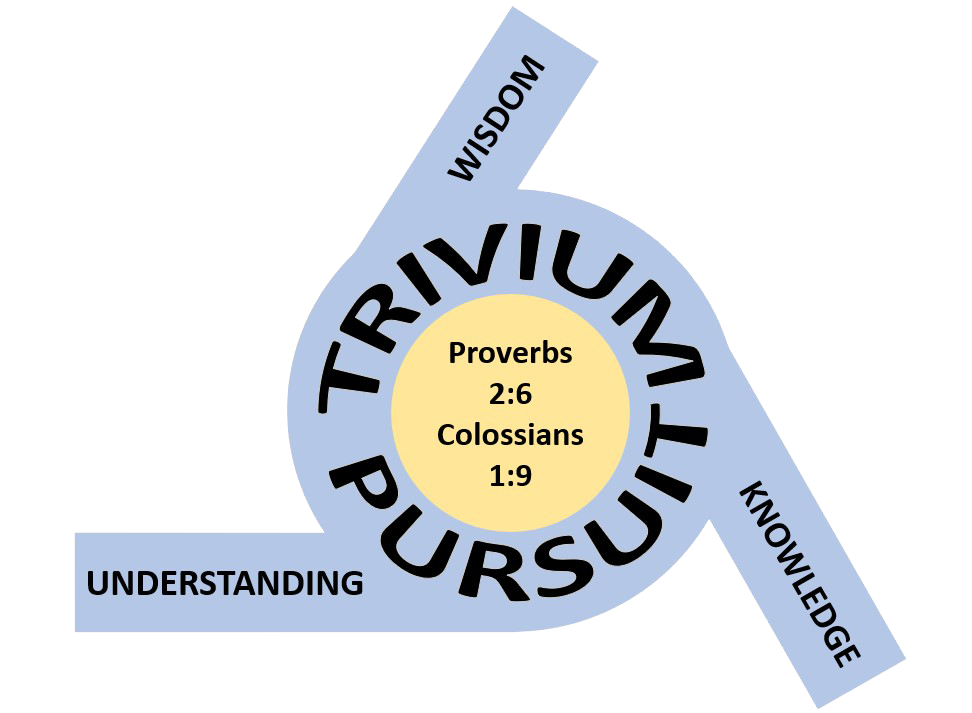
I would like to send a few words of thanks for including on your website the chapter from your book Teaching the Trivium: Christian Homeschooling in a Classical Style.
We have 4 beautiful children aged 6, 4, 2, and 4 months. I struggled through the end of my pregnancy, and have found the months since challenging, thanks to tiredness and constant back pain. Part of the challenge has been due to trying to figure out what I’m doing with homeschooling, and I get a little wound up worrying that I’m not “doing enough” with my darlings. I grew up surrounded by homeschooling, was raised on Accelerated Christian Education, and thought that when I had children it would all be a breeze, doing what I knew how to do. Then I started looking outside of what I knew, and decided not to use ACE. I have since found myself quite confused by the overwhelming amount of options, with no two acquaintances doing the same thing!
Last week I was battling through some grey days, and on hearing from a friend another comment about your book, I looked it up on the web to discover the cost, and that led to your website, and finding the chapter mentioned above. I gobbled it up so to speak, and found it very encouraging, yet simple and attainable. I have printed out the 10 steps and stuck it on my kitchen cupboard so I can think about it through the day. I thank you for including it on the site so I can get a taste of the book, and am looking forward to ordering my own copy next week when my book allowance catches up.
Thank you all for your service to those of us stumbling along the way. May God bless you for it!
Anne
Ah, your children are just babies — you have plenty of time for the academics. I suggest spending the next several months just reading aloud to your kids while you rest up from your pregnancy. Read to them books you enjoy. Concentrate just on the reading aloud and obedience. Take up the academics next fall perhaps. That will be soon enough.
No, ACE would not be a good choice.
Laurie
Truth in our words, is opposed to all deceit. The heart and tongue should go together, as the dial goes exactly with the sun. To speak fair to one’s face, and not to mean what one speaks, is no better than a lie. His words were smoother than oil —- but war was in his heart. Some have an art to flatter and deceive. Jerome, speaking of the Arians, says, they pretended friendship, they kissed my hands —- but plotted mischief against me. A man who flatters his neighbor, spreads a net for his feet. Deadly poison can be hidden under sweet honey. Falsehood in friendship, is a lie. Counterfeiting friendship, is worse than counterfeiting money.
Excerpt from
Body of Divinity
by Thomas Watson
When we wonder what God is doing with us, and are ready to kill ourselves with worry -— let us rest in God’s wisdom. He knows best what he has to do. “Your way went through the sea, and Your path through the great waters, but Your footprints were unseen.” Psalms 77:19. Trust his heart -— where you cannot trace his hand. God is most in his way, when we think he is most out of the way.
excerpt from The Attributes of God
by Thomas Watson
The wicked make wounds in the backs of the saints and then pour in vinegar; but God writes down their cruelty. Believers are a part of Christ’s mystical body; and for every drop of a saint’s blood spilt — God puts a drop of wrath in his vial! — Thomas Watson